
Borrowing a river, returning it
Run-of-river hydro is among the cleanest, most reliable forms of renewable generation. No large dam, no reservoir — just the natural fall of water, engineered into firm electricity.
From river to grid in five steps
Every Penhalonga Energy station follows the same proven path — designed, built and operated by our own team.
- Step 1
Weir & intake
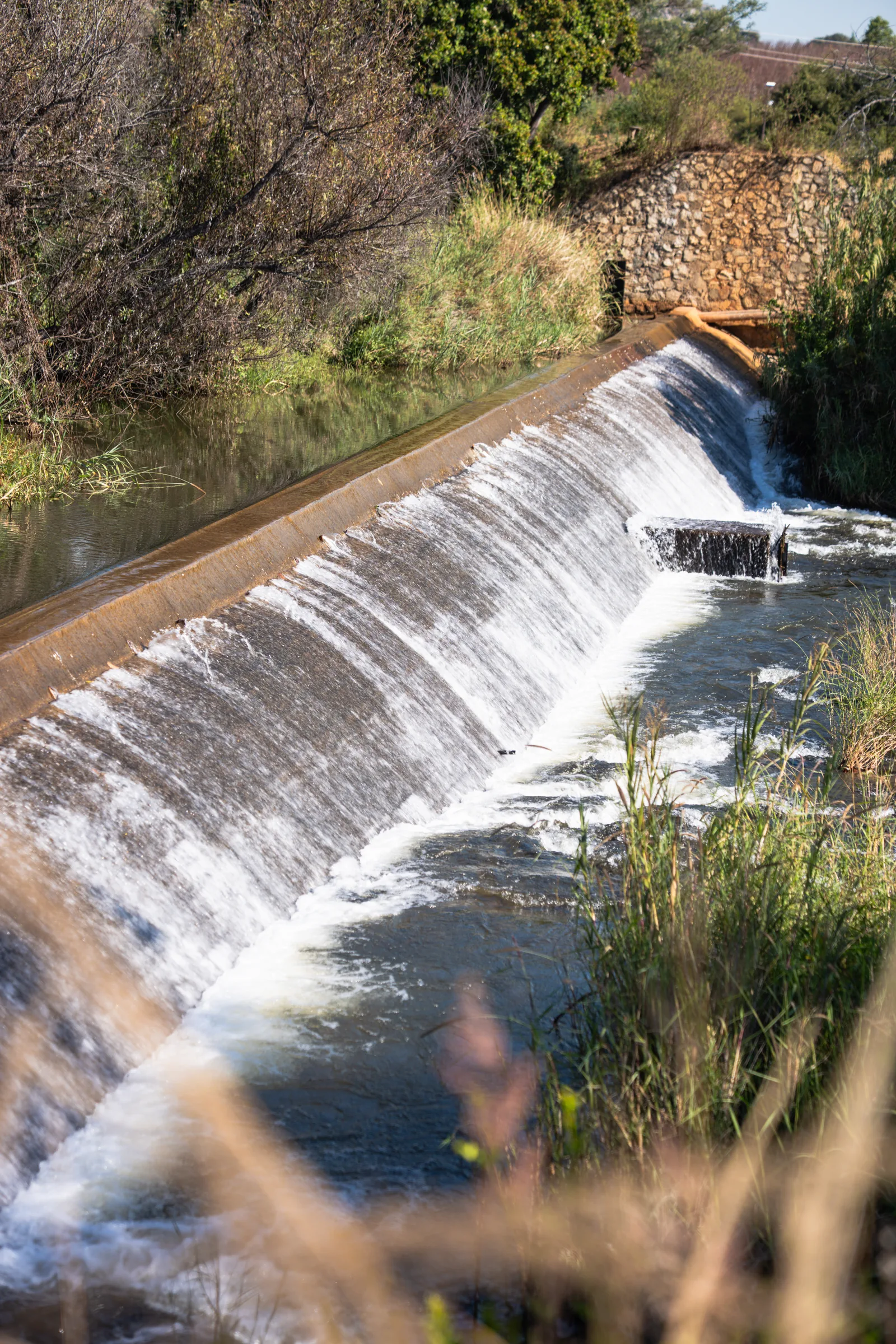
A low weir raises the river just enough to divert part of its flow into an intake — the rest of the river continues undisturbed.
- Step 2
Canal & forebay
A gently-graded canal carries the water to a forebay tank, settling sediment and creating a stable head of water.
- Step 3
Penstock
A steel pipeline drops the water down the hillside, converting height (head) into pressure at the powerhouse below.
- Step 4
Turbine & generator
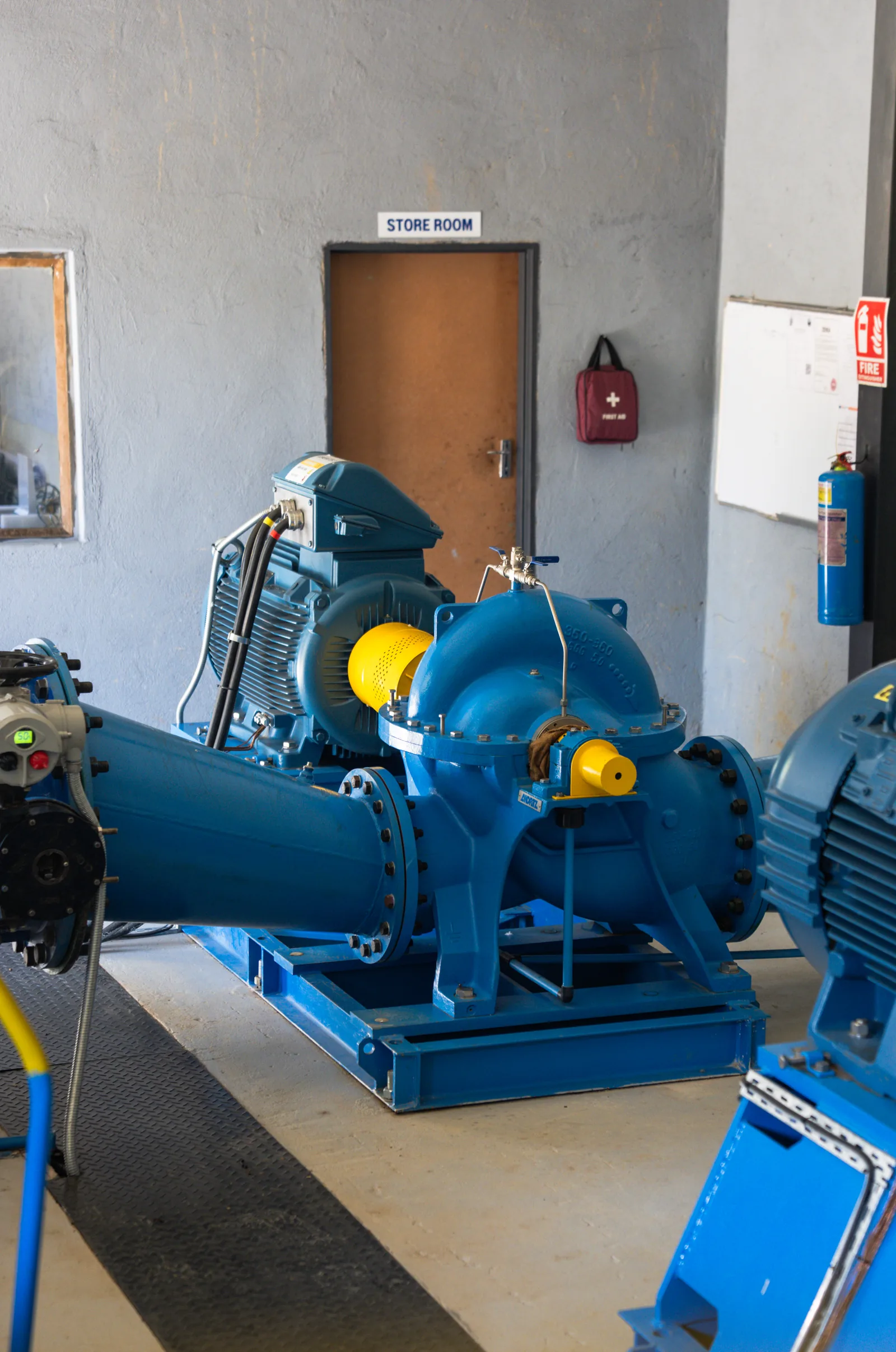
An Andritz pump-as-turbine spins a generator. The water then rejoins the river — nothing is consumed.
- Step 5
Switchyard & grid
Power is stepped up through our switchyard to 11 kV or 33 kV and fed onto the ZETDC network.
Pumps as turbines
For stations up to 1 MW we run industrial pumps in reverse, as turbines. It's a deceptively simple choice with outsized benefits.
Off-the-shelf, robust and widely serviceable — no exotic spares.
Greatly simplified control systems and switchyards, designed in-house.
Substantially lower build and lifetime maintenance costs.
Faster to procure and commission than bespoke turbines.
Clean, firm, and resilient by design
Run-of-river, not dams
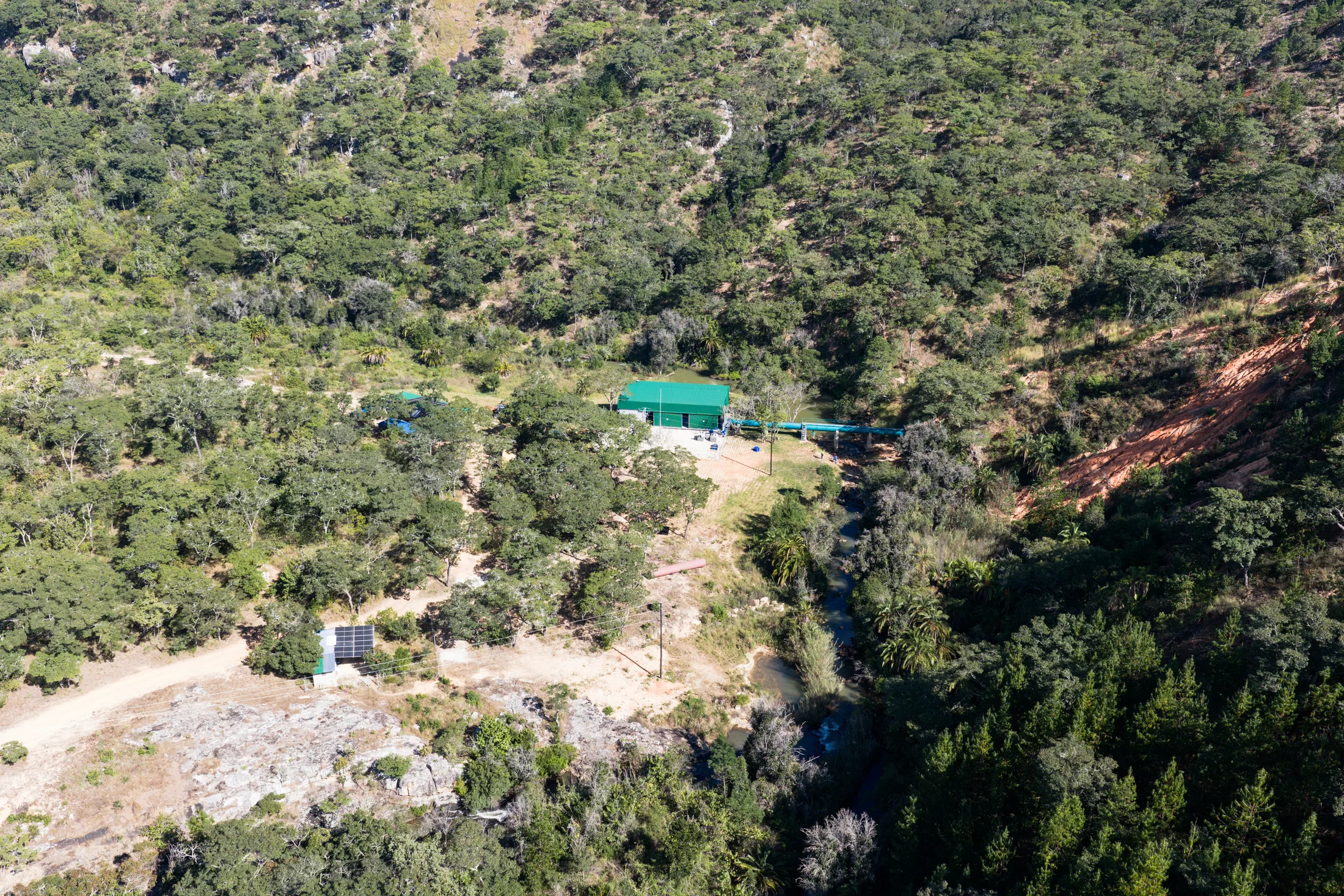
Every station is strictly run-of-river. We divert a portion of the natural flow through a weir and canal, drop it through a penstock, and return it to the river — no large reservoir, minimal environmental footprint.
Pumps as turbines
For stations up to 1 MW we use Andritz “pumps-as-turbines”. These greatly simplify the control systems and switchyards we design in-house, substantially reducing both build and lifetime maintenance costs.
Region 1 rainfall
Our assets sit in Zimbabwe's high-rainfall Region 1 in the Eastern Highlands — a resource far less exposed to drought than the country's dam-fed hydro.
Grid-connected IPP
Stations connect to ZETDC feeders at 11 kV and 33 kV under valid ZERA generation licences, selling power as a licensed Independent Power Producer.
Engineering that scales without the dam.
We're applying the same low-cost, low-impact playbook across a growing pipeline of sites. Talk to us about partnering on the next station.